Article
6 Tips to Ease Management of Complex Property Losses
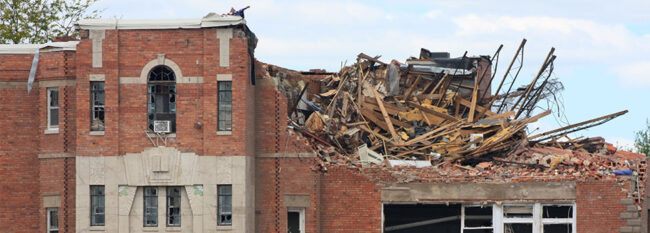
When structures suffer significant damage, often due to fire, flood or severe weather, members are faced with managing a complex recovery. It may involve injury, financial cost, extensive time coordinating repairs and the challenges of maintaining operations during lengthy reconstruction.
The purpose of MCIT coverage is to provide adequate funds to return the member’s property to its condition before the loss in compliance with the terms, conditions and exclusions of the MCIT Coverage Document. This includes code-required improvements on existing building components.
The following six tips can help members more easily navigate complex property losses. The actions noted below may be concurrent with each other.
Tip 1: Secure the Property, Mitigate the Loss, Preserve the Scene
Secure the Property
Safety is primary after a large property loss. The member should:
- Remove all individuals from an unsafe scene. In the case of a fire, stay out of the building and let fire personnel address the situation.
- Shut down utilities temporarily as needed in coordination with law enforcement, fire department and city personnel.
- Keep contact information (business cards) for those involved with the response efforts at the scene, such as fire department and law enforcement personnel. These contacts are important to the initial investigation of a large loss.
- Conduct emergency repairs to secure the building:
- Board up any openings in the exterior.
- Protect the scene from unauthorized access. Regular employees of the facility should not be allowed to return until the facility is ready for occupancy again. Safety is paramount, but unnecessary foot traffic may disturb evidence and reduce or eliminate subrogation recoveries from liable parties.
- Consider emergency visits from HVAC, plumbing and electric contractors to address temporary set up of vital operations.
After taking immediate steps to secure the property, the member should notify MCIT of the situation. See Tip No. 2 for details.
Mitigate the Loss
The member should hire qualified mitigation contractors for emergency water and/or fire mitigation services. This is often best if secured within the first 24 hours.
Qualified mitigation contractors have specialized knowledge and can be an asset in considering safety issues and protecting a scene for subrogation. Mitigation efforts conducted by inexperienced individuals can be unsafe and cause additional unnecessary damage.
Preserve the Scene
Verifying the cause of the loss is a vital part of the claim process. As such, it is important for the member to preserve the scene and protect evidence from being disturbed while the investigation into the cause is ongoing. Spoliation may occur when a scene is tampered with prior to allowing potentially liable parties to inspect the scene, which can prejudice potential subrogation recoveries.
MCIT completes the cause and origin investigation and then notifies the member that the scene is released and the secured building can be entered.
Tip 2: Report Claim to MCIT as Soon as Reasonably Possible
As soon as practicable, the member should report the loss to MCIT. Best practice is to report the incident within 24 hours. Members should report the claim either through the MCIT member portal (see orange button at top and bottom of page) or by calling 1.866.547.6516. The phone is answered 24/7.
Once MCIT is aware of the situation, the claim process can begin and the quicker the member can secure funds for repairs.
The MCIT claim representative calls the member’s designated contact to discuss immediate activity regarding safety, and the cause and extent of damages. These first conversations help clarify initial mitigation and securing the scene.
MCIT then hires necessary experts to conduct an investigation to determine the cause of the loss and to address safety and damages.
Tip 3: Designate 1 Person to Serve as Contact
To ease communication among all parties involved in the claim and repair process, it often works best for the member to designate one person in the organization to manage the situation. This person serves as the primary contact for MCIT, contractors and internal stakeholders.
Having one person managing the project for the member can help streamline information sharing and decision making along the claim process.
Tip 4: Understand Applicable MCIT Lines of Coverage
MCIT immediately begins to determine with the member which structures and items are affected including but not limited to buildings, contents, property in the open, automobiles, inland marine equipment and electronics.
With this determination, MCIT explains how the various lines of MCIT coverage apply to the circumstances, including all deductibles and extra expense (e.g., rental of space for displaced operations) due to the loss.
It is important for members to remember that different lines of coverage provide different levels of coverage:
- Scheduled buildings, contents and property in the open are covered at the replacement cost value, with a payment limit of 125 percent of the scheduled value. For covered losses, MCIT pays for direct physical loss to the covered property.
- Although changes to existing components required to bring the structure into compliance with laws or ordinances are generally covered, all other upgrades and enhancements, as well as architectural fees, independent inspection fees and project management services are not covered.
- Automobile and inland marine coverage are provided at actual cash value, which accounts for depreciation. Non-road licensed heavy equipment (e.g., dozers, graders) is covered under inland marine.
- Electronic data processing equipment is provided at replacement cost value and subject to the EDP inventory on file with MCIT.
Members should review the MCIT Coverage Document for specific terms, limits, deductibles, exclusions and conditions for coverage related to a specific property loss.
Best Practice Tip: Maintain Current Contents Inventory
Maintaining a current inventory of contents for each building benefits the member in two ways:
- Ensures the member has adequate levels of coverage for contents in the event of a loss.
- Helps determine the extent of contents damaged or destroyed when a loss occurs.
Suggestions for how to create the inventory:
- Walk around the facility while video recording the contents
- Photograph contents
- Create list of contents
Tip 5: Determine Damage
As soon as possible, the member should contact qualified contractors and subcontractors to begin the process of determining the extent of damages. MCIT hires an independent adjuster, and he or she works with the member’s contractors to:
- Establish an agreed scope of repairs to return the building to its preloss condition.
- Estimate the cost for that scope.
MCIT may also hire an engineer when necessary to help establish the scope of repairs.
The initial scope of work and estimate from contractors can aid the member in determining whether it needs to use a public bid process to award the repair contract(s).
Tip 6: Keep Upgrades to Structure Separate from Claim
Members often consider combining upgrades or maintenance-related repairs to a building that are unrelated to the claim with the claim-related repairs. Although MCIT understands that the member may want these modifications to structures, combining that process with the property loss claim will slow and complicate both.
Members should consider the following issues when adding unrelated upgrades to a large loss repair.
Application of MCIT Coverage Must Be Same for All Members
Members equally absorb the cost of large claims, such as the cost of claim payments and reinsurance coverage (insurance MCIT purchases to protect it from catastrophic claim costs). Securing property reinsurance is challenging and costly in today’s market. MCIT is required to clarify to reinsurers that all large loss claim payments are covered by the MCIT Coverage Document. For these reasons, MCIT cannot consider paying for costs related to noncovered upgrades or maintenance.
Separate Estimates for Covered Claim Repairs, Unrelated Upgrades Are Needed
These projects have different code implications, scope of work, costs and approval processes. It is vital for the member and its contractors to focus their efforts first on establishing the estimate for the claim-covered repairs.
Members should be aware that combining covered claim repairs with unrelated upgrades can lead to additional expenses that are the member’s responsibility. These often include additional expert and independent adjuster fees, and rent payments for an extended period of displacement from the damaged facility, along with all of the costs for the upgrades themselves.
Unrelated Building Upgrades May Require Repairs to Unaffected Portions of Building
When undergoing upgrades unrelated to the building’s damage, the member may need to bring unaffected areas of the structure up to current code or encounter other unexpected expenses. These hidden costs often exceed perceived savings by combining the rebuild and upgrade projects.
Keep in Mind Two-year Limit to Complete Repairs
Members have two years from the time of the loss to complete repairs to damaged buildings to be able to recover the withheld depreciation. Working in additional unrelated upgrades can create delays in completing the project within that two-year timeframe.
MCIT Is Here for Members Throughout the Process
MCIT understands the significant impact large property losses have on members. MCIT claim representatives work with members to minimize the burden of these claims, keep members informed throughout the process and answer their questions at any point.
Topics