Article
Infrared Imaging Technology Puts ‘Super-vision’ at Members’ Disposal
ELECTRICAL AND MECHANICAL EQUIPMENT MAINTENANCE
For decades comic book heroes have used their “super-vision” to locate danger unseen to the human eye. Now that capability is in the hands of normal humans—at least when it comes to identifying potential problems in building mechanical and electrical systems.
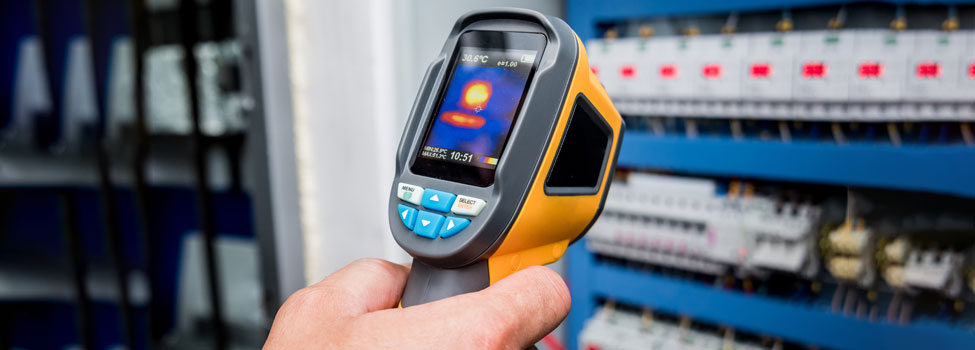
Infrared imaging detects the heat that every object emits in the form of electromagnetic thermal radiation, as well as measuring temperature differences. When measured surface temperature differences and thermal patterns of mechanical or electrical equipment are deemed abnormal or unexpected, technicians can diagnose the issues so corrective actions can be taken.
Abnormal readings may indicate situations such as overloaded electrical circuits, loose connections, damaged electrical insulation and excessive or unwanted friction.
Cost-effective Prevention
Infrared electrical and mechanical surveys are cost-effective methods of identifying preventive maintenance for a system. The noncontact, nondestructive method of infrared scanning can save both time and money.
Infrared surveys must be conducted while equipment is running, therefore avoiding expensive stoppages or after-hours work. Finding problems at an early stage allows repairs to be made before they cause business interruption and expensive equipment damage.
An infrared scan of an MCIT member’s cooling tower pump fuse block showed that one of the unit’s fuse wire connections was 68 degrees hotter than the others. This indicated a higher potential for that fuse to fail, which would shut down a portion of the building’s air conditioning.
After further inspection, it was determined that simply disassembling and cleaning the unit would solve the problem and reduce the potential for failure and high-cost emergency repairs.
Wide Application
The use of infrared scanning equipment has diagnosis applications for any situation where there is a potential thermal difference. A systematic scan of a building’s envelope (the outer shell of a structure) can detect where heating or air conditioning is escaping, so specific energy saving strategies can be implemented. On certain flat roofs, infrared scans can locate trapped moisture in the insulation of the roofing system, which can assist in locating water leaks.
Infrared thermography scanning can also be used for applications such as determination of liquid levels in freestanding vessels, blocked radiator tubes in internal combustion engines and finding broken water lines beneath concrete floors.
Infrared predictive testing surveys should be performed by a skilled thermographer who has a working knowledge of building systems and uses quality and properly calibrated equipment. Qualified maintenance staff or electricians should review survey results and recommendations for corrective actions.
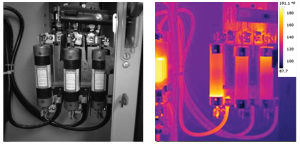 Infrared scanning of electrical and mechanical systems, such as the pump fuse block (above left), can identify potential problems that other inspections may not. The infrared scan (above right) indicates a significant heat difference in one of the unit’s fuse wire connections. If left as it is, the fuse could fail and partially shut down the building’s air conditioning. |
Suggested frequency of surveys range from six months to three years and is dependent on the age and condition of the building as well as the amount of critical equipment it contains. It is important to consider how the building’s use and power load varies throughout the year when establishing an inspection schedule.
MCIT equipment breakdown coverage provider Hartford Steam Boiler (HSB) is an industry leader in the areas of infrared thermography scanning education and program development. HSB will assist MCIT members with questions about infrared thermography and can provide on-site surveys at member rates. Information about infrared thermography can be obtained by contacting MCIT.
The information contained in this document is intended for general information purposes only and does not constitute legal or coverage advice on any specific matter.
Topics