
Article
Tips for Responding to First Amendment Audits
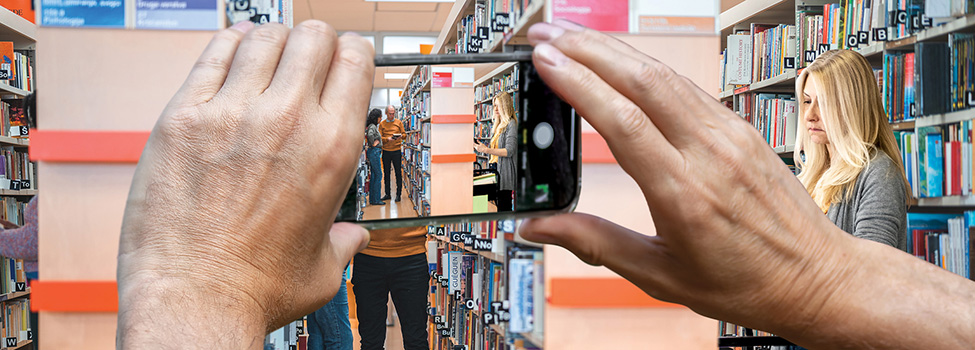
“First Amendment audit” generally refers to when a member of the public films public employees or elected officials in public places to “test” the right to film and the government’s response.
Some auditors refer to themselves as citizen journalists or social media activists. The auditor may portray the audit as education or to promote transparency and accountability. The videos are often posted to social media and used to make money. The auditor may try to provoke a confrontation to make the video more interesting and generate more views.
It may be uncomfortable for those being filmed without their permission, but the public generally has a right to record public employees and officials carrying out their official duties in public places.
However, the right to film is not without limitation and may be restricted in some spaces. For example, filming can generally be prohibited in bathrooms, employee offices and areas where the public is not permitted.
Best Practices for Best Outcome
Public employees and officials should use care during encounters with First Amendment auditors because it can result in legal liability or have other negative consequences, such as reputational damage for individuals or the entity. Individuals can take a number of steps to be prepared for and respond to audits.
Before an Audit
Conduct a walkthrough of the building or work area and consider which locations are accessible to the public and what the public can view from an accessible area. This includes areas the public can view through windows, either within the interior of the building or on the exterior of the building.
Make sure that not public data is not visible from public areas. Determine whether any changes should be made, including installing curtains or privacy film on windows, locating computers or desks so information on screens or desktops cannot be viewed from a public area, and posting signs marking nonpublic areas (e.g., “employees only”).
Educate employees and elected officials about First Amendment audits so they know what to expect and how to react when an audit occurs. Also train employees about entity policies related to public access, filming and other First Amendment rights, and harassment or workplace violence prevention.
Consult legal counsel with any questions about the public’s First Amendment rights and the entity’s responsibilities. Members may also want legal counsel to review any policies that restrict filming or other First Amendment rights.
During an Audit
Keep calm, remain professional, and carry on with business as usual. Auditors may ask many questions, so answer the questions to the extent they would be answered for other members of the public. Treat the auditor like anyone else.
Do not argue with the auditor, overreact or escalate the situation. Keep the encounter uneventful and uninteresting. A video of a public employee responding calmly and professionally is not likely to generate many views on social media.
Let the auditor film, so long as the auditor is not attempting to access a restricted area, or disrupting the workplace or the use of the property. Merely filming in an unrestricted area open to the public is not breaking the law or disrupting the workplace.
Do not request or attempt to confiscate the auditor’s recording equipment.
Do not record or take pictures of the auditor with a personal device. It could lead to a data practices request for the information on the personal device.
After an Audit
Debrief: Discuss what went well and what could have been done differently.
Monitor for any negative consequences: Was the video posted to social media? Has there been any publicity as a result of the audit?
Topics