Article
Open Meeting Law FAQs: Meeting Remotely
MCIT has a variety of other resources about the Open Meeting Law, and the risk management staff is available to provide general risk management information about this law. Members should consult with their own legal counsel regarding how the statutes apply to a specific situation.
There is nothing in the Open Meeting Law that limits the number of times that a board member may virtually attend a meeting. The only statutory limitation is related to the number of times that a board member’s remote location can be closed to the public when meeting under Minnesota Statutes, Section 13D.02. Board members are limited to closing their remote locations to the public no more than three times in a calendar year when the board member is serving in the military and is at a required drill, deployed or on active duty, or has been advised by a health care professional against being in a public place for personal or family medical reasons.
The decision of whether to conduct a meeting using interactive technology remains in the governing body’s discretion. From a risk management standpoint, governing bodies should be consistent in their decisions about when the use of interactive technology is appropriate.
Yes, but with some limitations. Section 13D.02 requires all remote locations be open and accessible to the public. There are two exceptions to this requirement:
- The board member is serving in the military and is at a required drill, deployed or on active duty.
- The board member has been advised by a health care professional against being in a public place for personal or family medical reasons.
These limited exceptions to the open and accessible requirement can be used by a board member no more than three times in a calendar year.
The analysis is slightly different if the board is currently meeting under Section 13D.021 because it determined that an in-person meeting or a meeting under Section 13D.02 was not practical or prudent due to a health pandemic or Chapter 12 emergency. There is no requirement for remote locations to be open and accessible to the public under Section 13D.021.
Boards should keep in mind Minnesota Department of Administration Advisory Opinion 21-003, which opined that when a quorum of board members was able to gather in person at the regular meeting location, this contradicted a prior determination that an in-person meeting or a meeting under Section 13D.02 was not practical nor prudent.
MCIT recommends that members consult with their legal counsel with any questions, particularly if deciding whether a meeting under Section 13D.021 is appropriate.
There is nothing in the Open Meeting Law that addresses the location from which a board member may participate remotely. In Advisory Opinion 13-009, the Minnesota Department of Administration opined that the plain language of section 13D.02 “does not forbid a member of a public body from ‘attending’ a public meeting at a location ‘open and accessible to the public’ outside the entity’s geographic area, as long as all the other conditions of that section are met.”
Presumably, this same reasoning would apply to meetings held under Section 13D.021, permitting meeting from a location outside the entity’s jurisdiction as long as all other required conditions are met.
The answer may depend in part on when the in-person meeting is occurring. Under Minnesota Statutes, Section 13D.02, entities must give notice of the regular meeting location and any locations at which board members will be participating via interactive technology, unless the remote location is closed to the public under the limited exceptions. The timing and method of providing the notice must be as described in Minnesota Statutes, Section 13D.04, which describes notice provisions for regular, special and emergency meetings.
Generally for most regular and special meetings, this means that at least three days before the date of the meeting, the notice must be posted on the principal bulletin board (or on the door of its usual meeting room if there is no principal bulletin board) and mailed or otherwise delivered to each person who has filed a written request for special meeting notices.
If the notice cannot be provided within the allotted time frame, it may not be possible for the board member to be considered present at the meeting for purposes of determining a quorum and participating in all proceedings from a remote location.
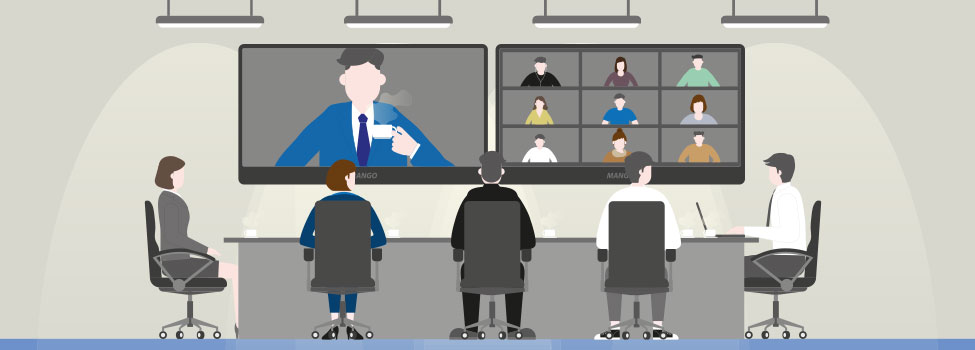
Section 13D.02 of the Minnesota Open Meeting Law allows a local government board member to be considered present at the meeting for purposes of determining a quorum and participating in all proceedings from a remote location via interactive technology when certain statutory conditions are met. Among these conditions is a requirement that all members of the body participating in the meeting, wherever their physical location, can hear and see one another and all discussion and testimony presented at any location at which at least one member is present.
The statute also requires that members of the public present at the regular meeting location of the body can hear and see all discussion, testimony and votes of all members of the body.
If the remote board member does not have video, all conditions for meeting remotely are not met, and it may not be possible for the board member to be considered present at the meeting for purposes of determining a quorum and participating in all proceedings from a remote location.
The analysis may be different if the board is currently meeting under Section 13D.021 because it determined that an in-person meeting or a meeting under Section 13D.02 was not practical or prudent due to a health pandemic or an emergency declared under Chapter 12. Under Section 13D.021, the conditions only require that the members of the body, wherever their location, and the members of the public at the regular meeting location be able to hear all discussion, testimony and votes. There is no requirement for video.
Members should consult with their own legal counsel regarding how the statutes apply to a specific situation.
See Meeting Remotely Under Open Meeting Law for more details.
Topics