Article
Considerations for Allowing Pets in the Workplace

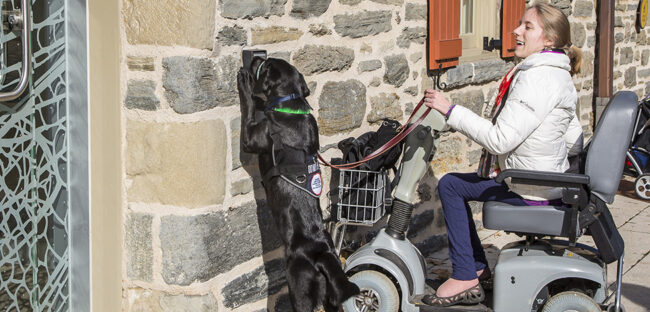
The issue of pets in the workplace is different from the presence and use of service animals to assist employees with disabilities.* Typically the use of service animals is a reasonable accommodation for the disabled employee.
Before an employer allows pets on premises, they should perform a cost-benefit analysis, including possible liability and coverage issues.
Risks of Pets in the Workplace
When contemplating allowing pets in the workplace for reasons other than a reasonable accommodation, an employer should consider the risks associated with such a practice. These risks may include:
- Injury to the employee, other employees or visitors in the workplace
- Injury to clients if the animal is allowed to travel with the employee
- Damage to the employer’s property
- Injury to the pet
An employer not only has the responsibility of providing a safe workplace for its employees, but it also has a legal duty to exercise reasonable care for the safety of others who may use its premises (i.e., buildings and grounds).
Pets in the workplace may result in a workers’ compensation claim if the animal attacks or trips an employee, or a liability claim if the pet endangers or harms a visitor. The actions of the animal may also result in property damage from chewing items such as furniture and rugs or urinating.
Although pets can be a source of therapy and improve morale, introduction of pets in the workplace can also be a distraction. It could increase the likelihood of accidents and adversely affect overall employee productivity.
Factors to Consider
When determining whether to allow pets in the workplace, the employer should consider a number of factors and then create a clear policy. The employer should discuss and anticipate a variety of potential pets (dogs, cats, birds, snakes, fish, ferrets, iguanas, etc.) visiting the work site. The employer’s willingness to permit some animals and exclude others could be viewed as favoritism.
Other issues the employer should consider are that:
- Employees may be afraid of or dislike some animals.
- Employees may be allergic to some animals.
- Animals could cause injuries by biting, scratching, etc. or by creating a fall or tripping hazard.
- Animals may not get along with other employees’ animals.
- Pets can create health hazards related to pets’ urine, feces, vomit and parasites (e.g., fleas and ticks).
- Pets can cause the workplace to be dirty and require additional custodial services.
- Pets can cause damage to the workplace.
- Pets can cause excessive noise.
The employer should also answer the questions:
- How will the employer address all employees’ pet preferences?
- What kind of pets will be allowed? Size or species restrictions?
- Are there areas of the employer’s property where pets are not allowed (building, grounds, vehicles, parking lot)?
- Should there be a designated area outside for pets to be walked and that employees must clean up after their pets?
MCIT coverage should also factor into a member’s decision when considering the introduction of pets in the workplace. Typically, an employee who sustains an injury or illness that can be attributed to factors in the workplace is eligible for workers’ compensation.
In the event of injury to others or damage to property resulting from the animal, MCIT coverage is dependent on the nature of the claim made.**
In all instances, MCIT would be obligated to explore subrogation opportunities against the employee pet owner.
Employers should consider whether to require the employee to sign an indemnification agreement and have his or her own insurance covering damages or injuries caused by the pet. Employers may also consider requiring the employee to release the employer for harm that may come to the pet.
Based on an assessment of the issues, the employer should write a policy about pets in the workplace that sets the employer’s rules and requirements related to pets. For example, the policy could include rules related to the animal’s behavior and health, vaccination requirements, trial periods and protocol for on-site injuries.
The owner of the pet should be required to agree to the written policy and provide any necessary paperwork related to the pet’s health/vaccination status.
If a decision against allowing pets in the workplace is made, the employer should consider adopting a policy statement that provides clear guidance on the issue such as the following.
“[Name of organization] does not allow pets in the workplace except for service animals that are trained to assist individuals with disabilities. Employees who are in need of a service animal must obtain authorization through the job accommodation process prior to bringing the animal to the workplace. [Name of organization] does not allow an employee’s pet to accompany the employee while the employee is on official business. Authorized service animals may accompany an employee as needed.”
Careful Consideration Recommended
Although pets in the workplace may have some benefits, downsides exist, too, such as potential for injuries to employees and others, as well as the potential for property damage. Any employer that considers allowing pets should carefully weigh whether it wants to accept these potential risks.
To endorse a policy that allows pets at work requires that the employer equally enforce the policy. Failure to enforce the policy increases the likelihood of an injured party alleging that the employer is vicariously liable for the actions of the employee’s pet.
* See the Individual’s Right to Service Animal in Public Service Verses Employment Setting for more information.
** Although Minnesota Statutes Section 604A.302 provides limited liability for property owners relative to damage or injury caused by assistance animals, this limitation would likely not be extended to pets.
Topics